
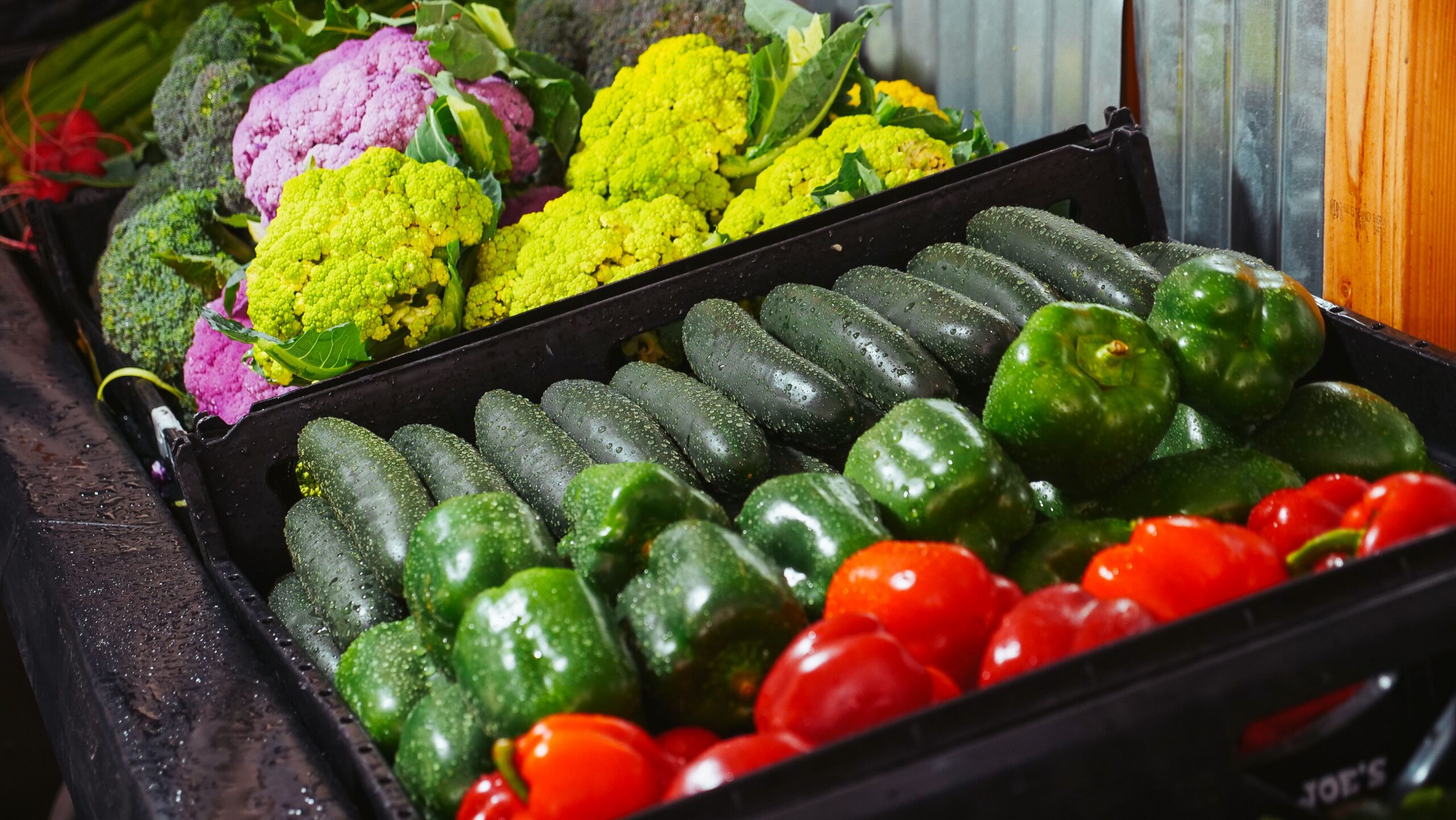
When it comes to choosing something healthy to eat, it’s hard to go wrong with fruits and vegetables.
From disease prevention to bodyweight management, and everything in between, there doesn’t appear to be anything these anti-inflammatory powerhouses can’t do to help us lead longer, healthier lives.
By now, I’m sure that all of this comes as no surprise. Whether or not you’re consuming the recommended 5-8 servings per day, that’s another story for another day.
My purpose today is to share something with you that you might not realize concerning your fruits and vegetables, and introduce you to a very helpful resource.
Did you know that many of the fruits and vegetables you’re currently buying at the supermarket are heavily contaminated with pesticides?
In addition, three out of the top 10 pesticides currently being used on our produce are PFAS or “forever chemical” pesticides.
Considering long-term pesticide exposure has been linked to neurological damage, hormone disruption, reproductive issues, cancer, and cognitive impairment, and behavioral issues in children, this is not something we should take lightly.
At the same time, it doesn’t mean we should completely stress out about it, and use it as an excuse to avoid eating our veggies.
So, what can you do if you want to reduce your exposure to these chemicals?
Each year, the Environmental Working Group (EWG) puts out two lists regarding the levels of pesticides found in our fruits and vegetables. The Dirty Dozen list includes the most contaminated, while the Clean Fifteen comprises those that are the least contaminated.
The EWG considers four measures of pesticide contamination when determining its fruit and vegetable rankings:
- Abundance: Percent of samples with at least one pesticide detected.
- Diversity: Average number of different pesticides detected on a single sample.
- Intensity: Average total concentration of pesticides found on a single sample.
- Toxicity: Overall toxicity of pesticides on a crop.
Here are the main takeaways:
- Almost 60% of samples for all Clean Fifteen fruits and vegetables had no detectable pesticide residues.
- Nearly ALL samples of produce on the Dirty Dozen had pesticide residues, with the average being four.
- A total of 203 pesticides were found on the Dirty Dozen.
- The most frequently detected pesticide across all fruits and vegetables is a forever chemical (Fludioxonil) PFAS pesticide.
Before testing, each piece of fruit or vegetable is washed under running water for 15 to 20 seconds, the same way most people do at home.
While I highly recommend you check out the EWG for more information and to see where your favorites rank, here are the most current lists for 2026:
Dirty Dozen: Produce with the most pesticides
- Spinach
- Kale, collard & mustard greens
- Strawberries
- Grapes
- Nectarines
- Peaches
- Cherries
- Apples
- Blackberries
- Pears
- Potatoes
- Blueberries, + Green beans, + Bell & hot peppers
Clean Fifteen: Produce with the least pesticides
- Pineapple
- Sweet corn
- Avocados
- Papya
- Onions
- Sweet peas
- Asparagus
- Cabbage
- Cauliflower
- Watermelon
- Mangoes
- Bananas
- Carrots
- Mushrooms
- Kiwi
So now that you have this information, what do you do with it?
The most important thing is not to go off the deep end and use it as an excuse not to eat your fruits and vegetables.
If you routinely buy produce that resides within the Dirty Dozen, consider buying organic, especially if it’s something you eat daily or several times per week.
You might think about starting a little garden, or go even smaller with just a container or two on your patio.
Or, head down to your local farmers’ market and develop relationships with vendors that grow their produce pesticide-free.
On the flip side, if it’s part of the Clean Fifteen, you might choose to save your money and opt for the conventional version.
As you begin to look at the Dirty Dozen yearly, you will notice some subtle changes. However, there tend to be some habitual offenders.
Over the 15 years I’ve been consulting this resource, I can tell you that apples and strawberries have shown up every single year – often occupying spots #1 and #2.
While you’ll have to consider what’s best for you and your family, my own personal philosophy is to buy the best, highest-quality produce I can find and afford. And, especially so if it’s something I eat daily or weekly. For what it’s worth, this extends to all categories of food.
While you’ll never completely eliminate your exposure to pesticides and toxins in general, it’s probably good practice to limit them whenever and however you can.
With the beginning of summer and fresh produce filling the supermarket, I hope you’ve found this helpful.